
The Watchtowers of the Huerta
Between the 15th and 17th centuries, up to 43 towers of watch, refuge and defence were raised in Alicante's huerta; 25 still stand today. They were not isolated fortifications, but an interconnected system.
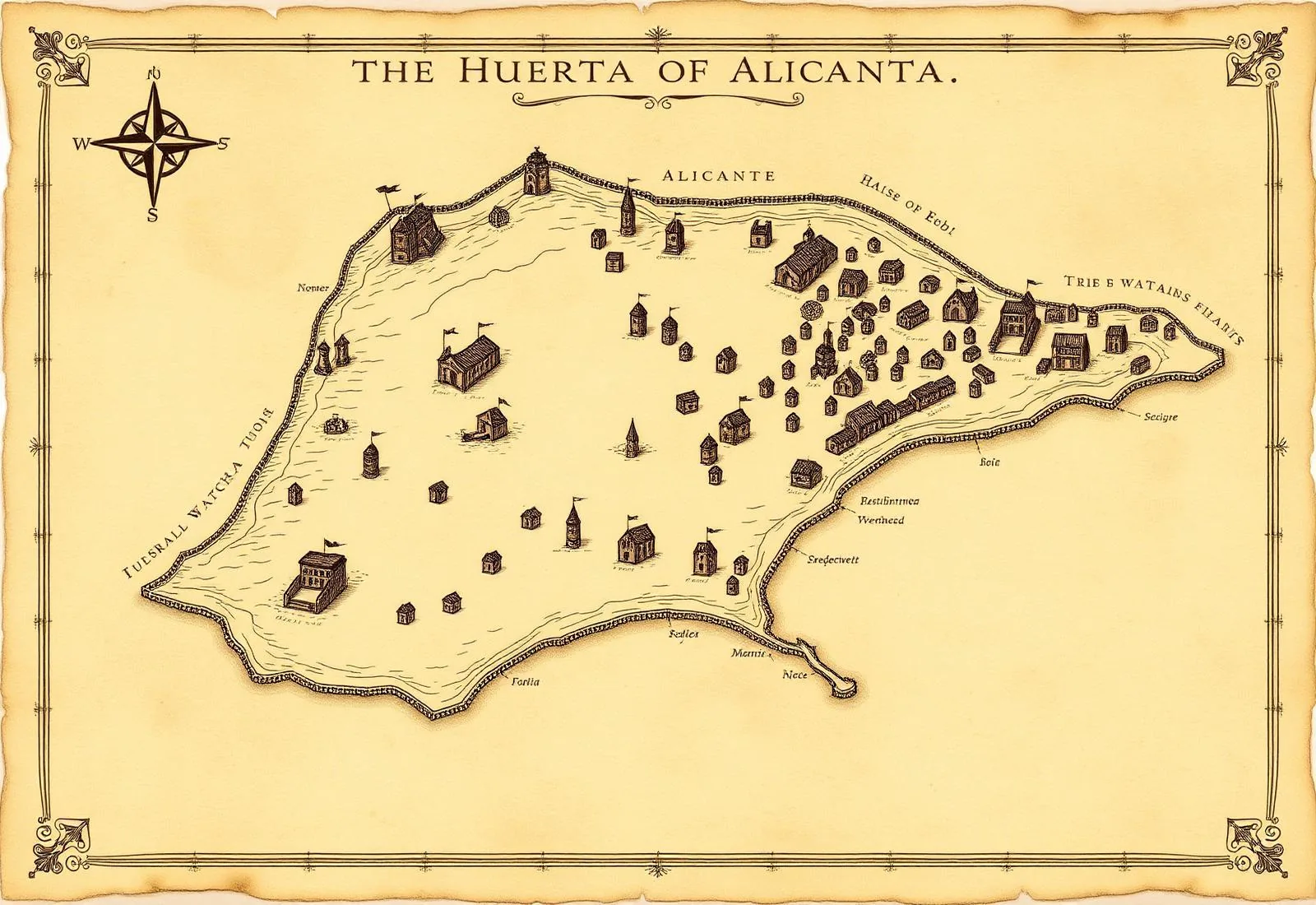
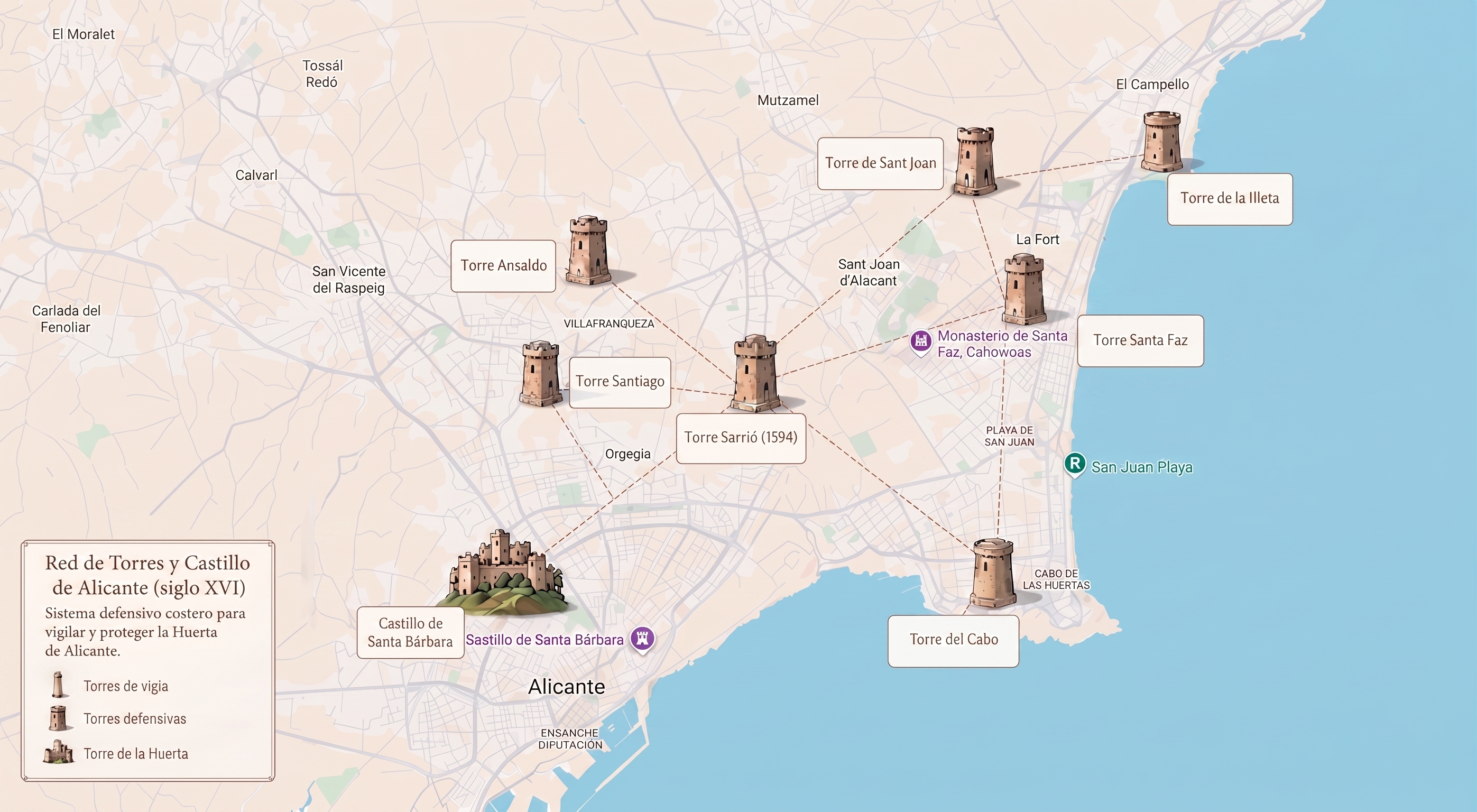
Map of the Huerta of Alicante showing the location of the 16th-century defensive towers.
The Huerta Towers at Sunset
A photographic collection of the 20 defensive watchtowers ordered according to the official numbering of the historical reference map.
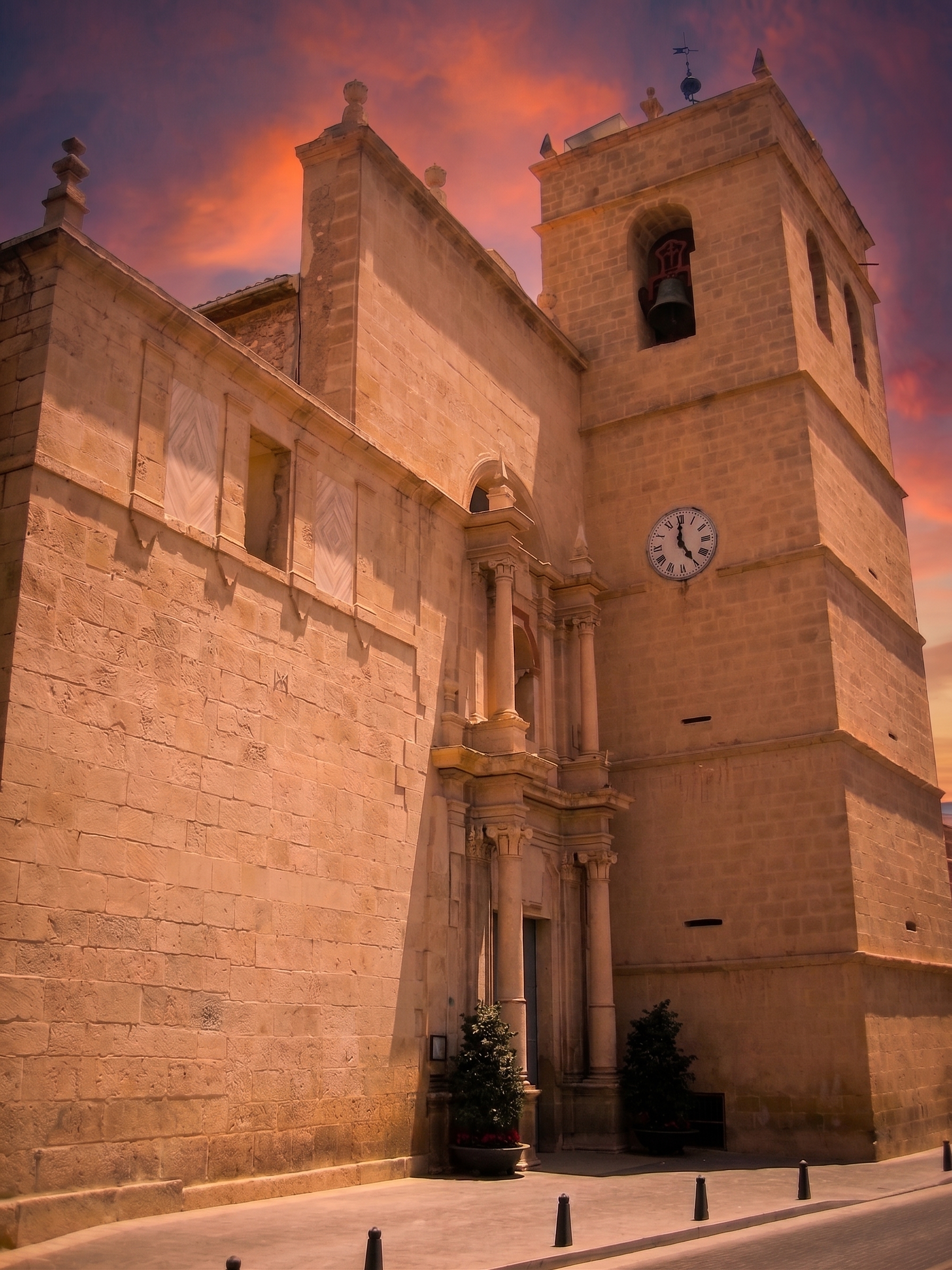
Torre de Sant Salvador / Mutxamel
Partida de Mutxamel
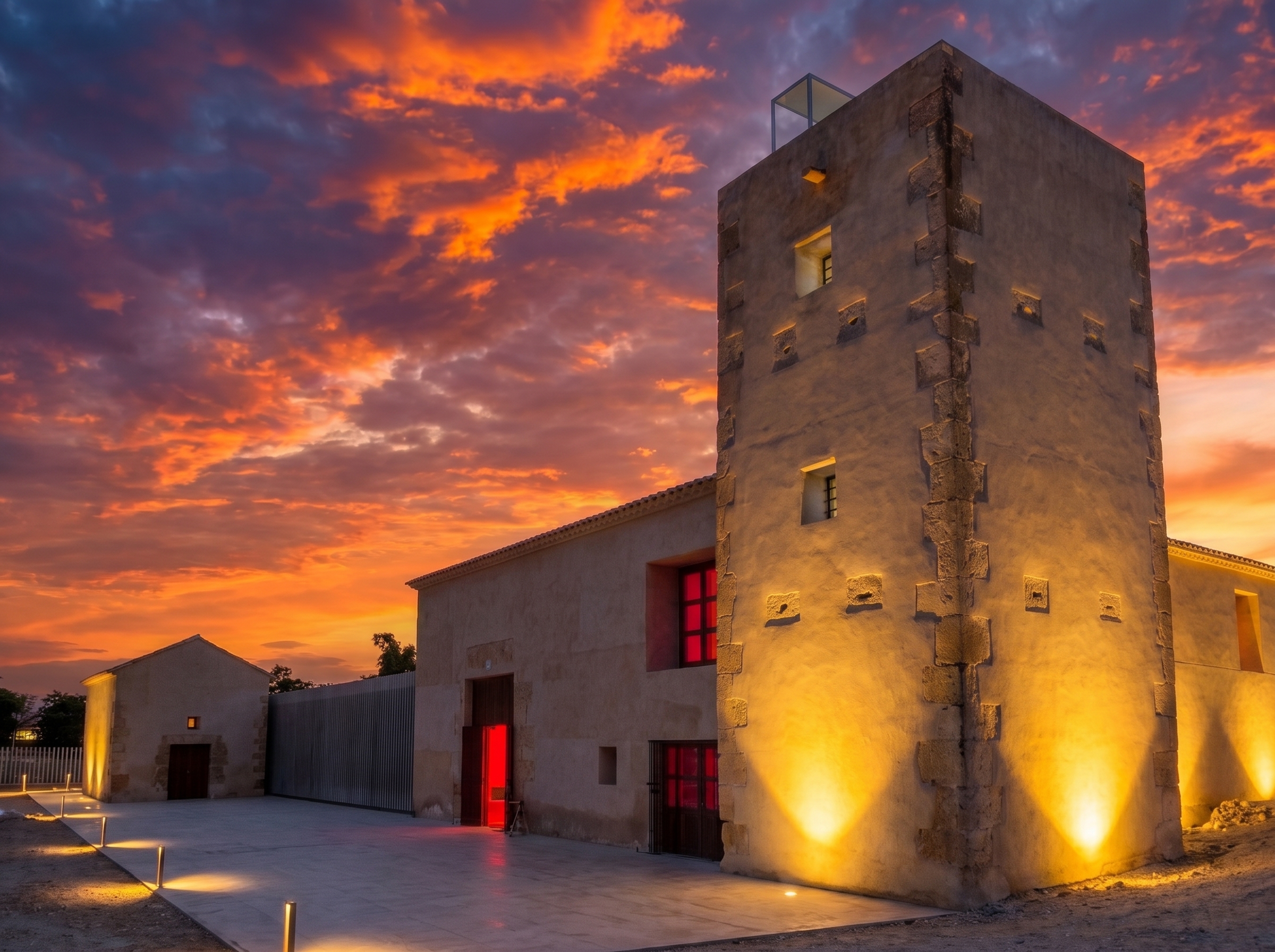
Torre Ansaldo
Partida de Sant Joan d'Alacant
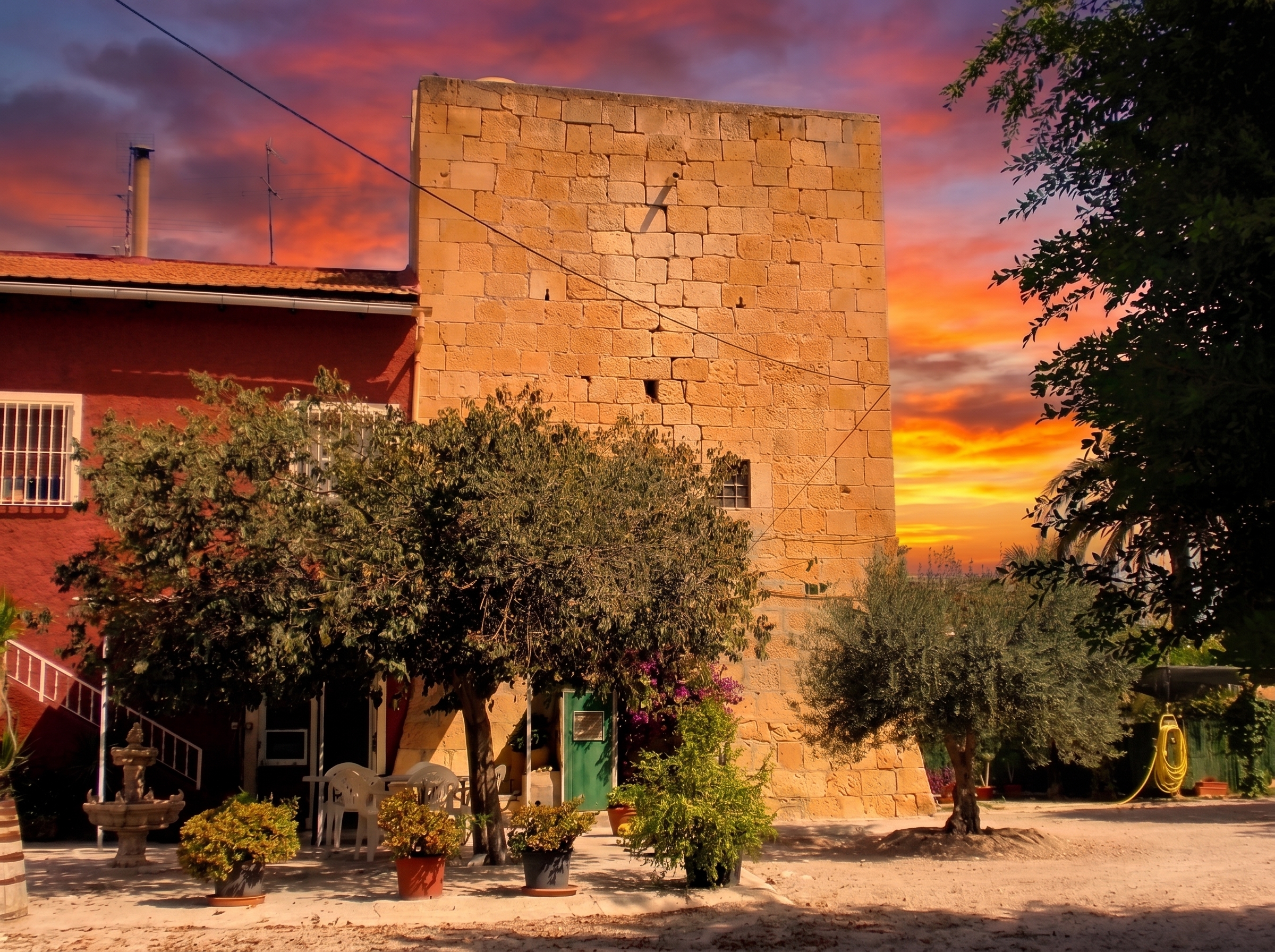
Torre Salafranca
Partida de la Huerta
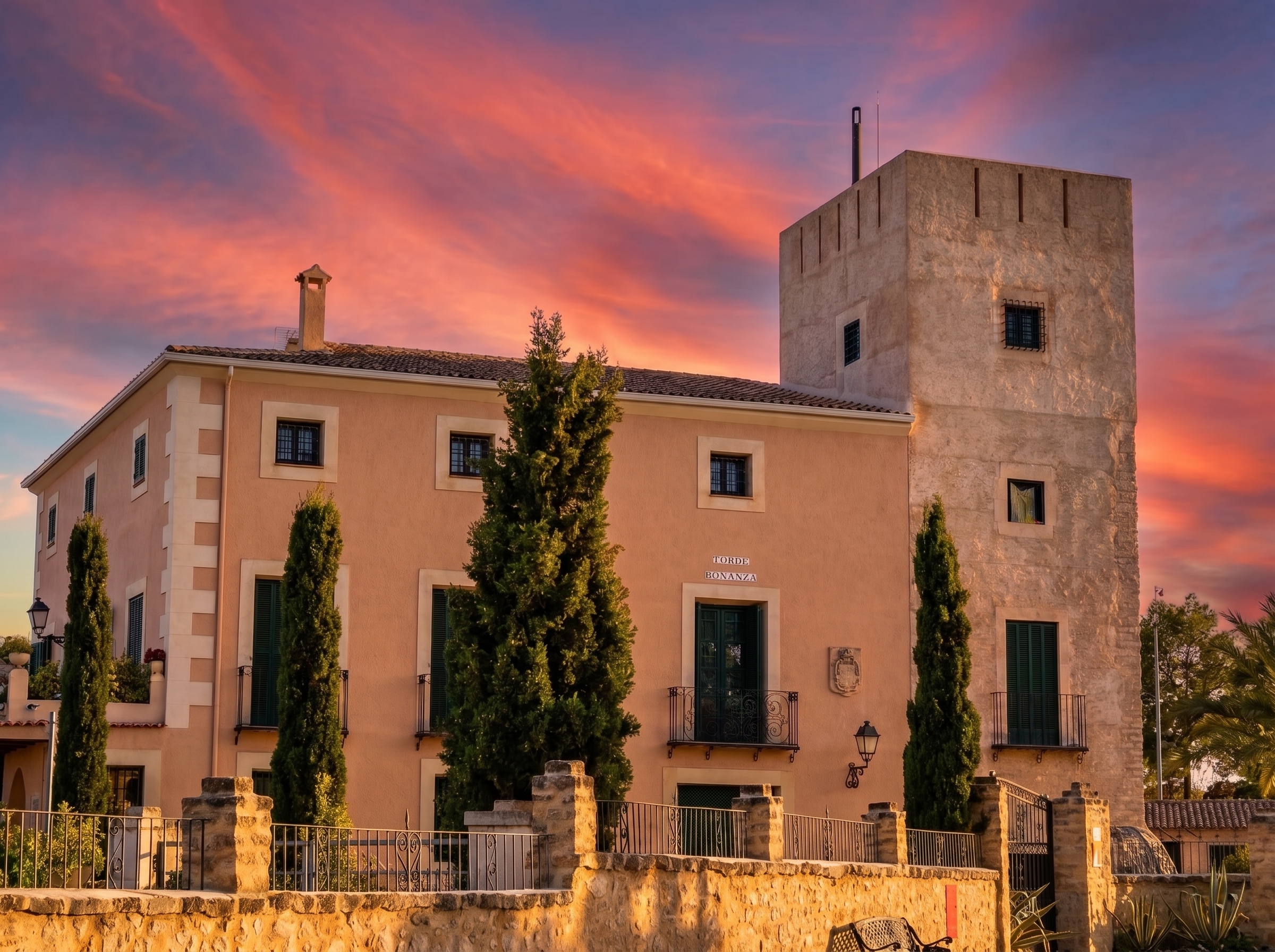
Torre Bonanza
Camí del Campello
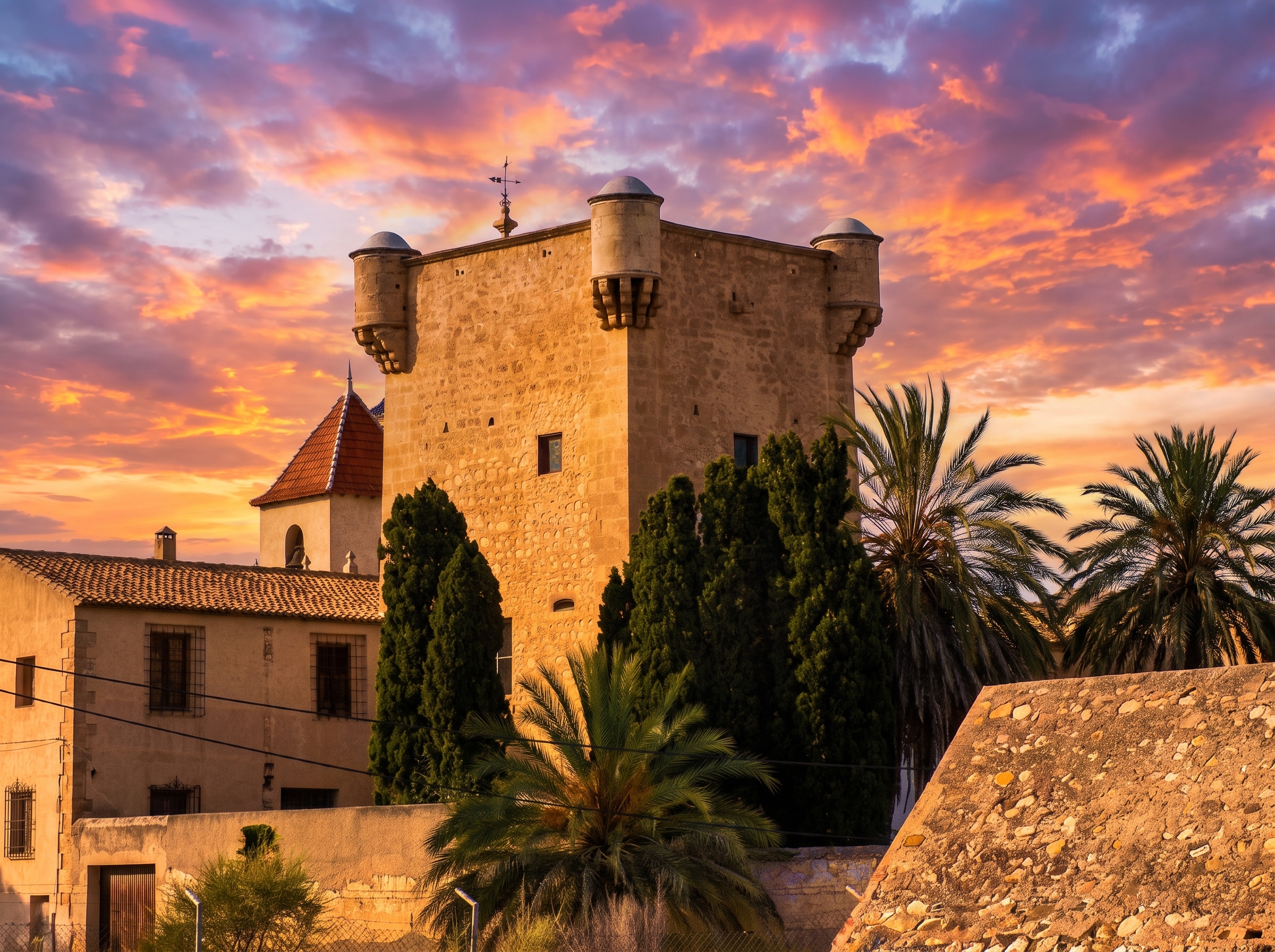
Torreó del Monasterio de la Santa Faz
Monasterio de la Santa Faz
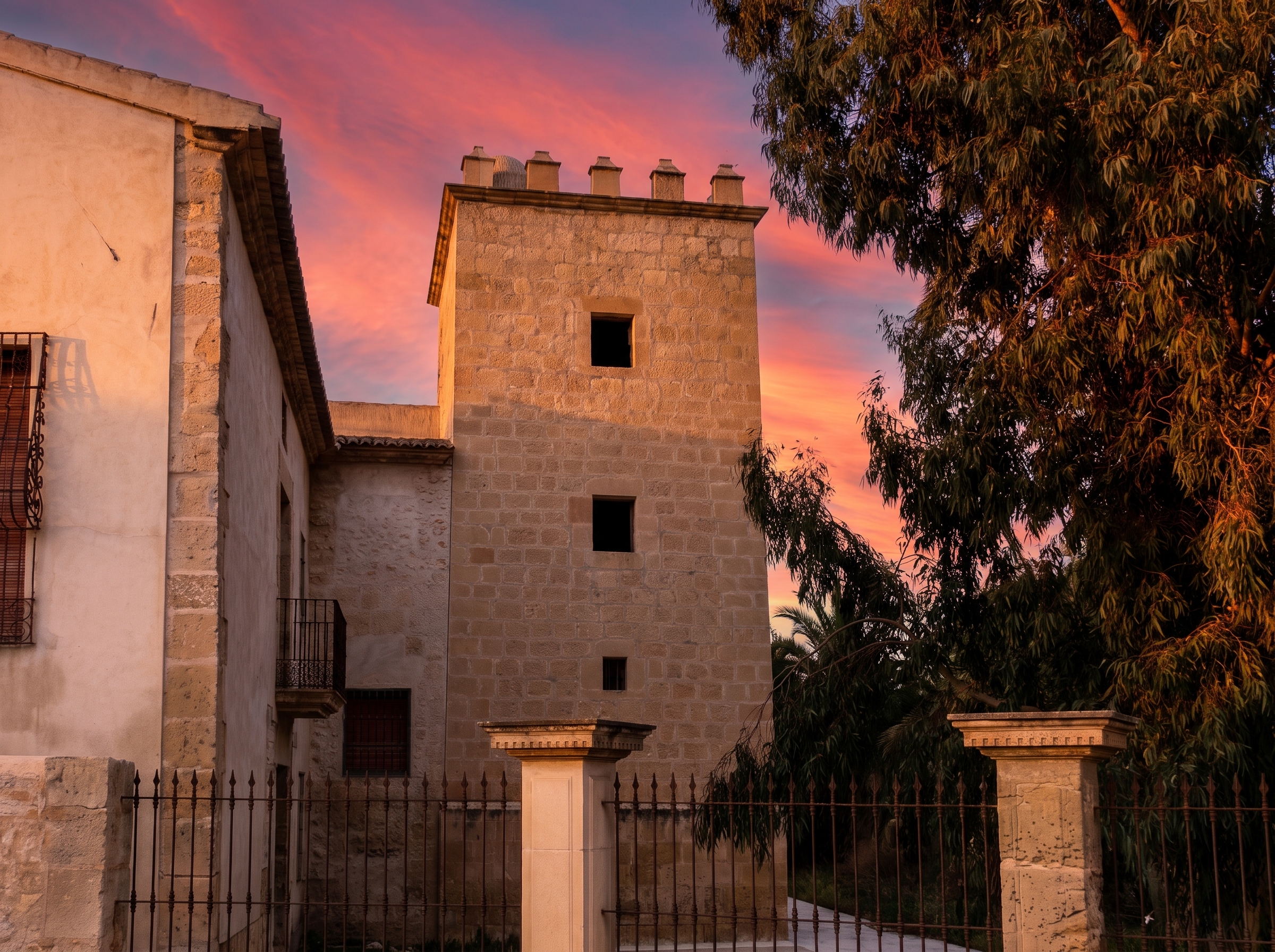
Torre Soto
Partida de la Huerta
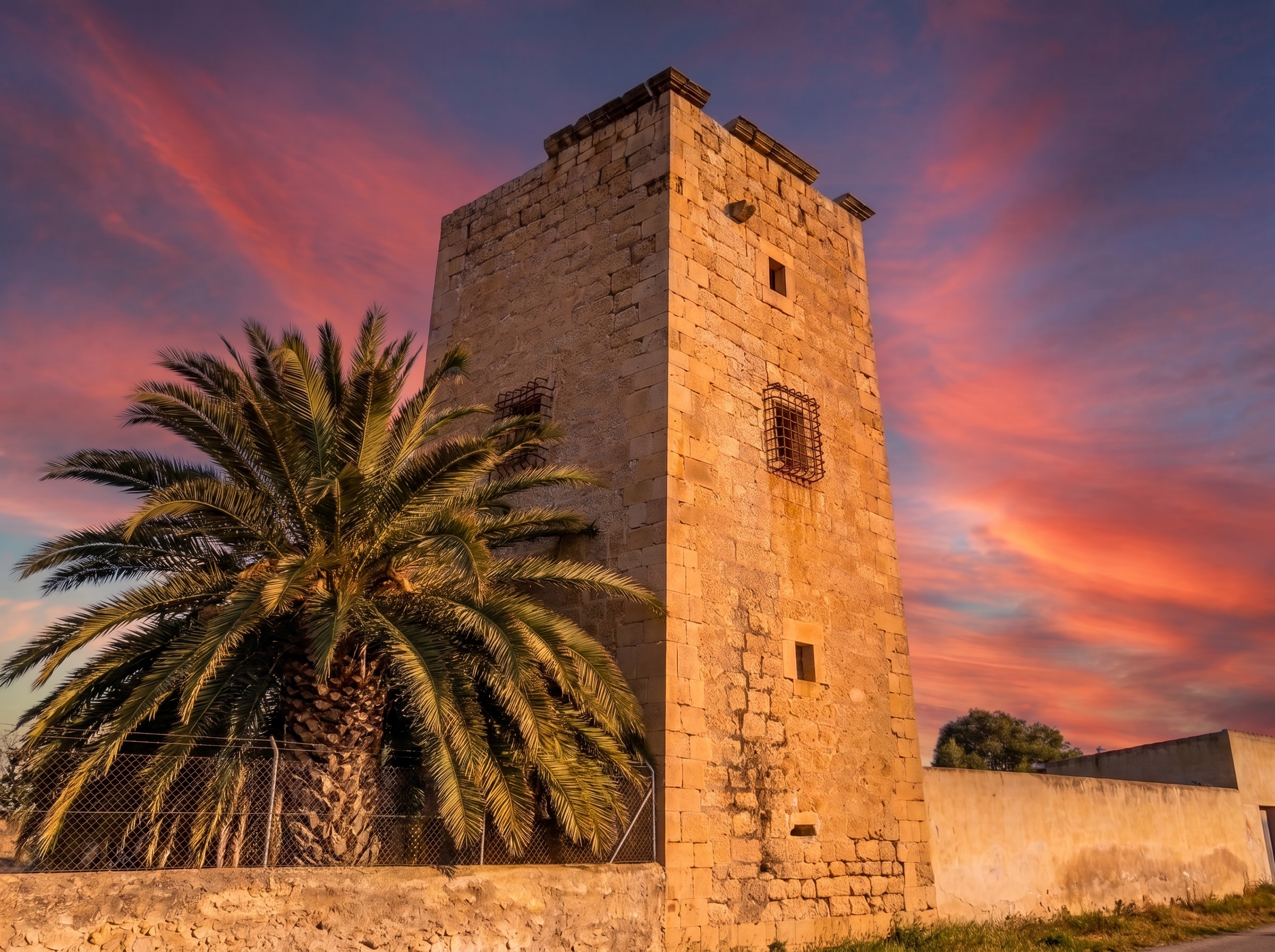
Torre Villagarcía
Partida Fabraquer
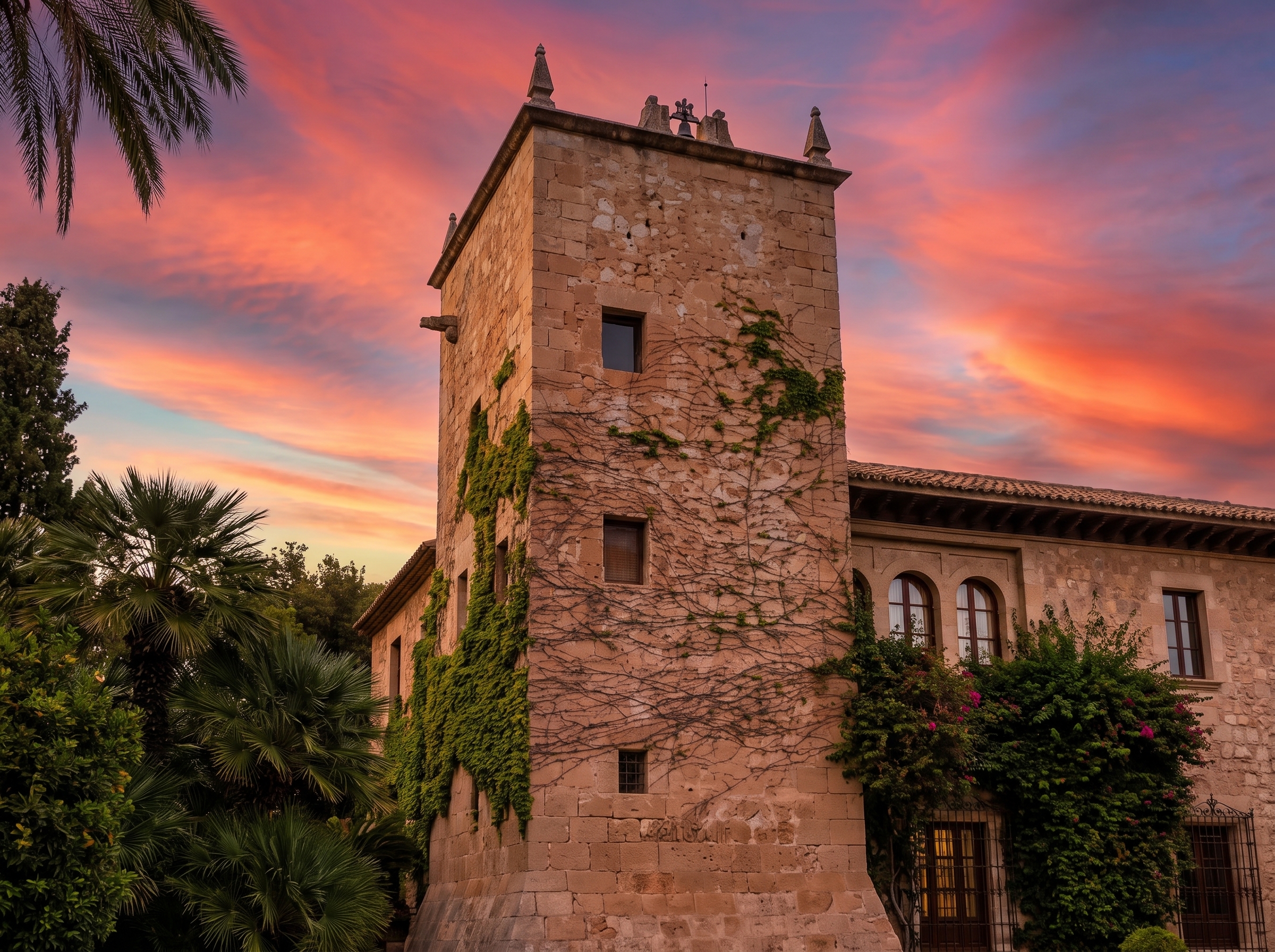
Torre Alameda / Nicolau
Partida de la Condomina
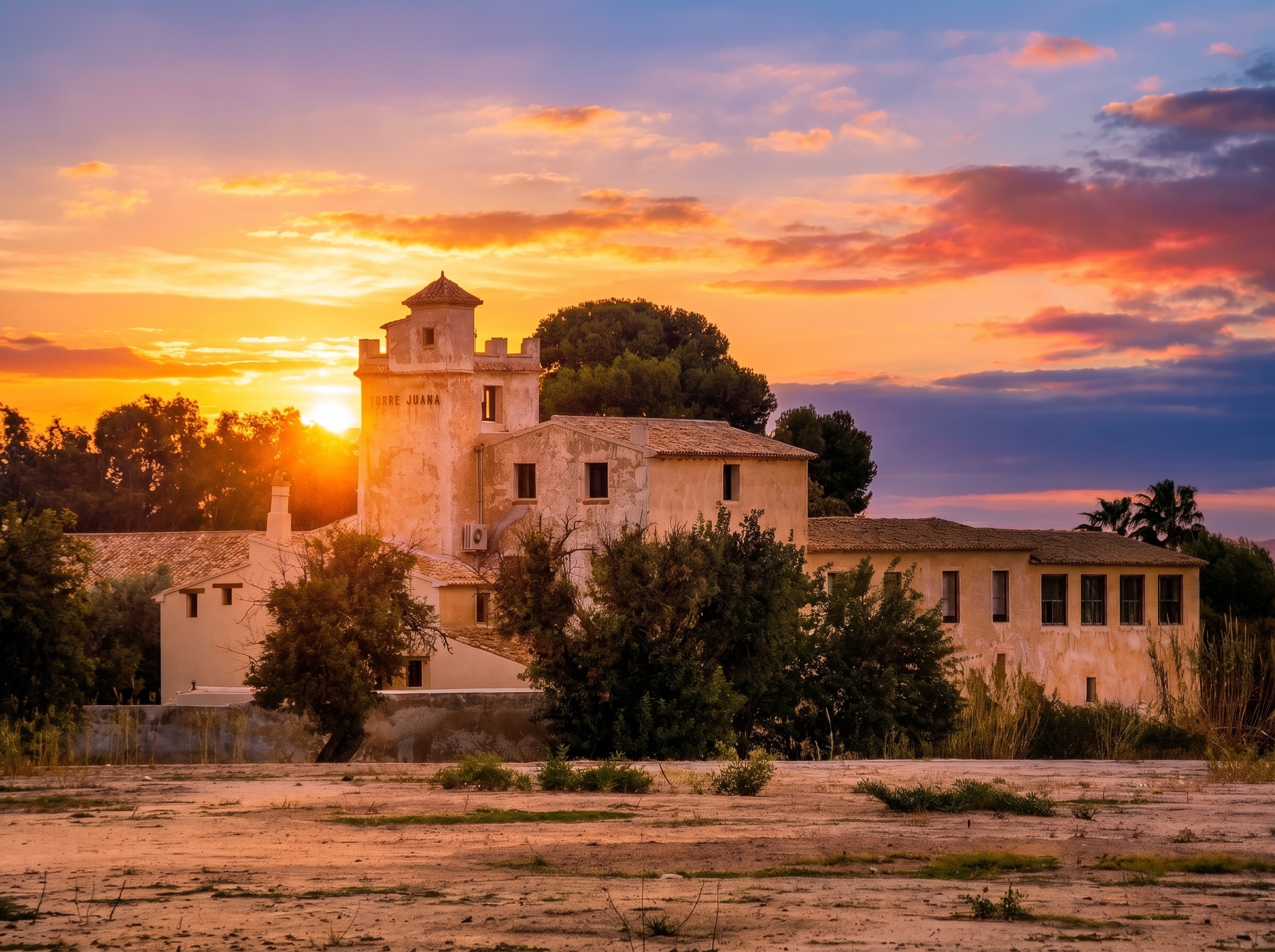
Torre Juana
Partida de la Huerta
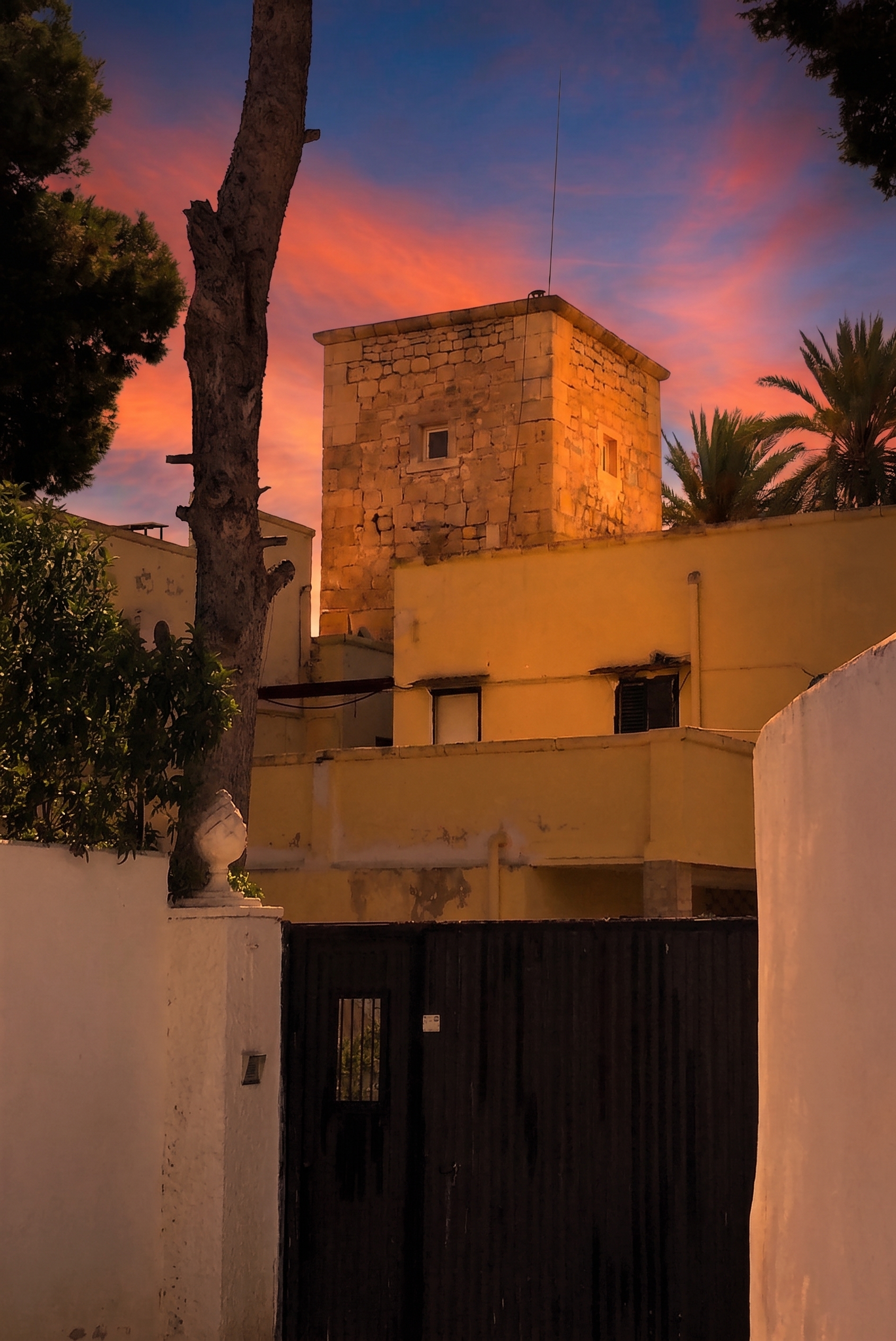
Torre Cacholí
Huerta de Sant Joan
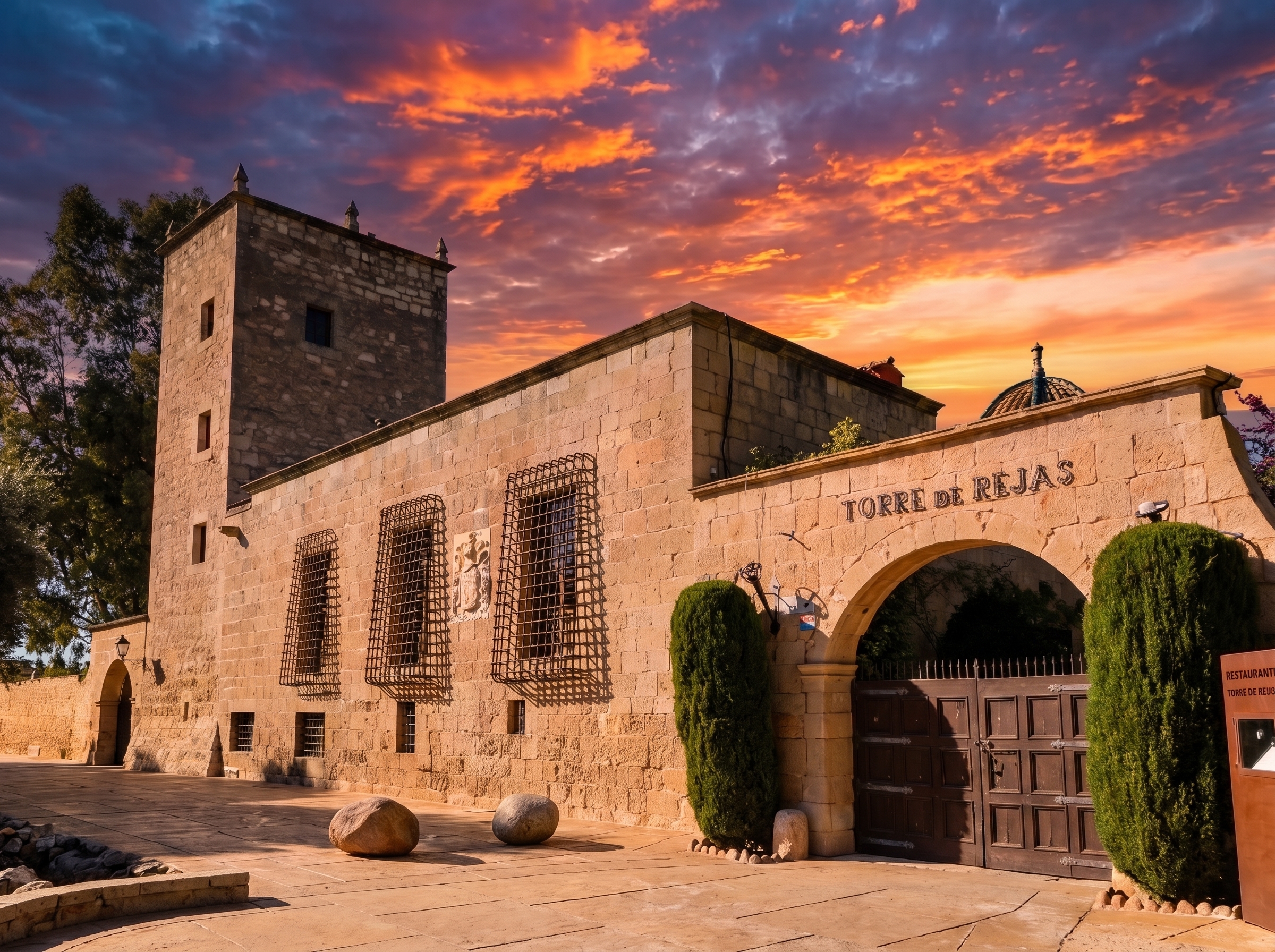
Torre de les Reixes
Partida de la Condomina
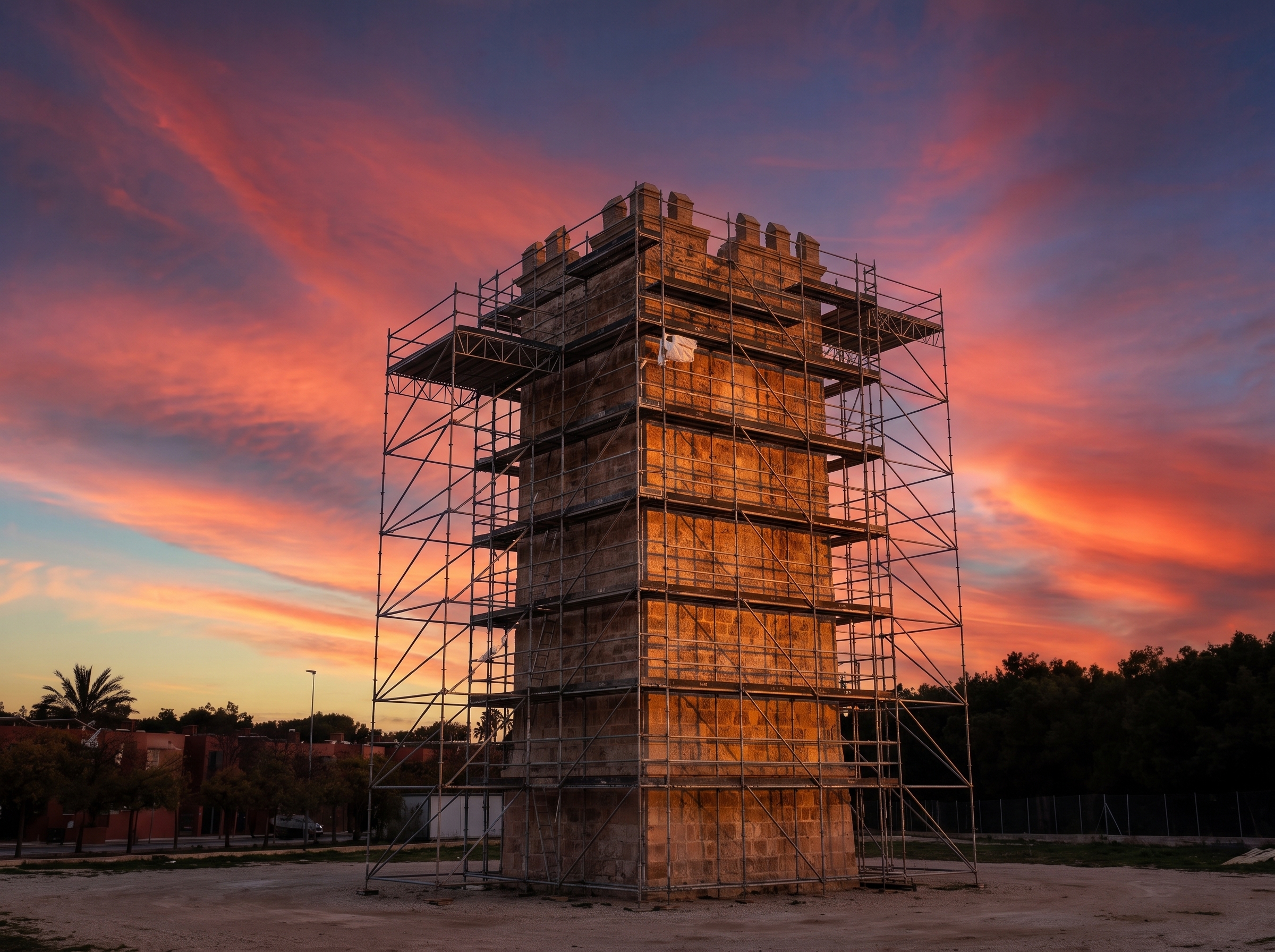
Torre Plàcia / Plácida
Partida de la Condomina
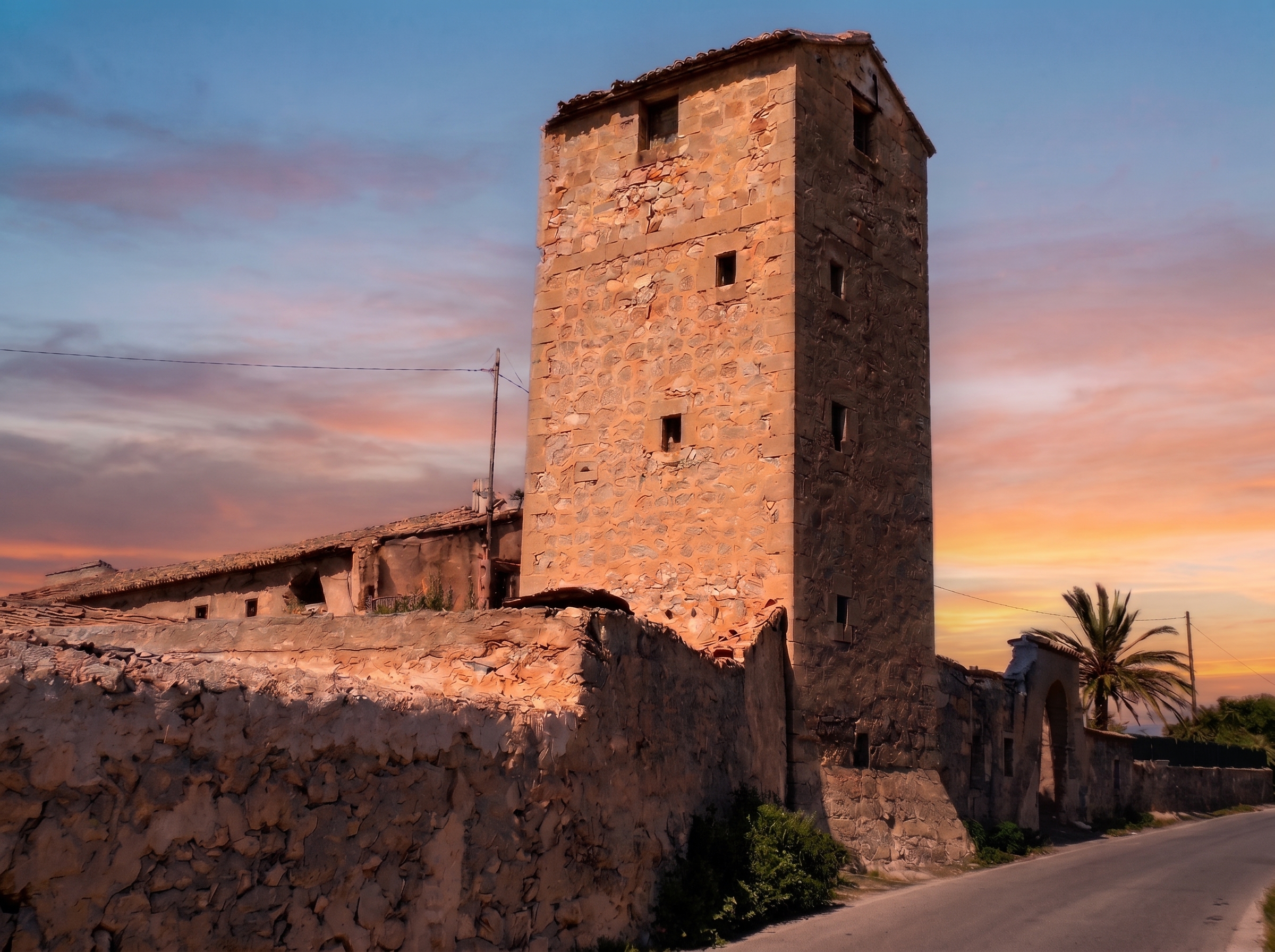
Torre Boter
Partida de la Condomina
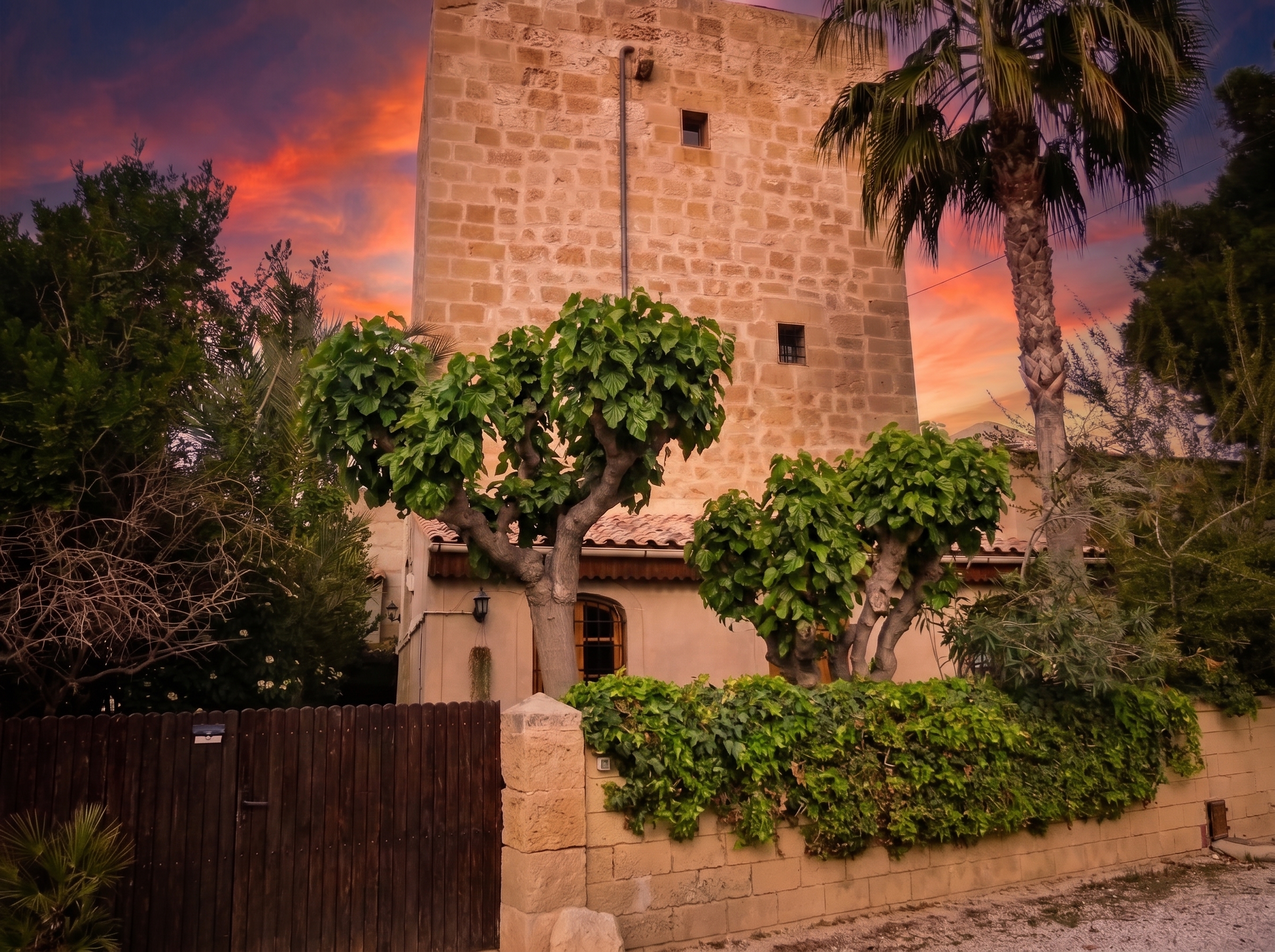
Torre Media Libra
Partida de la Condomina
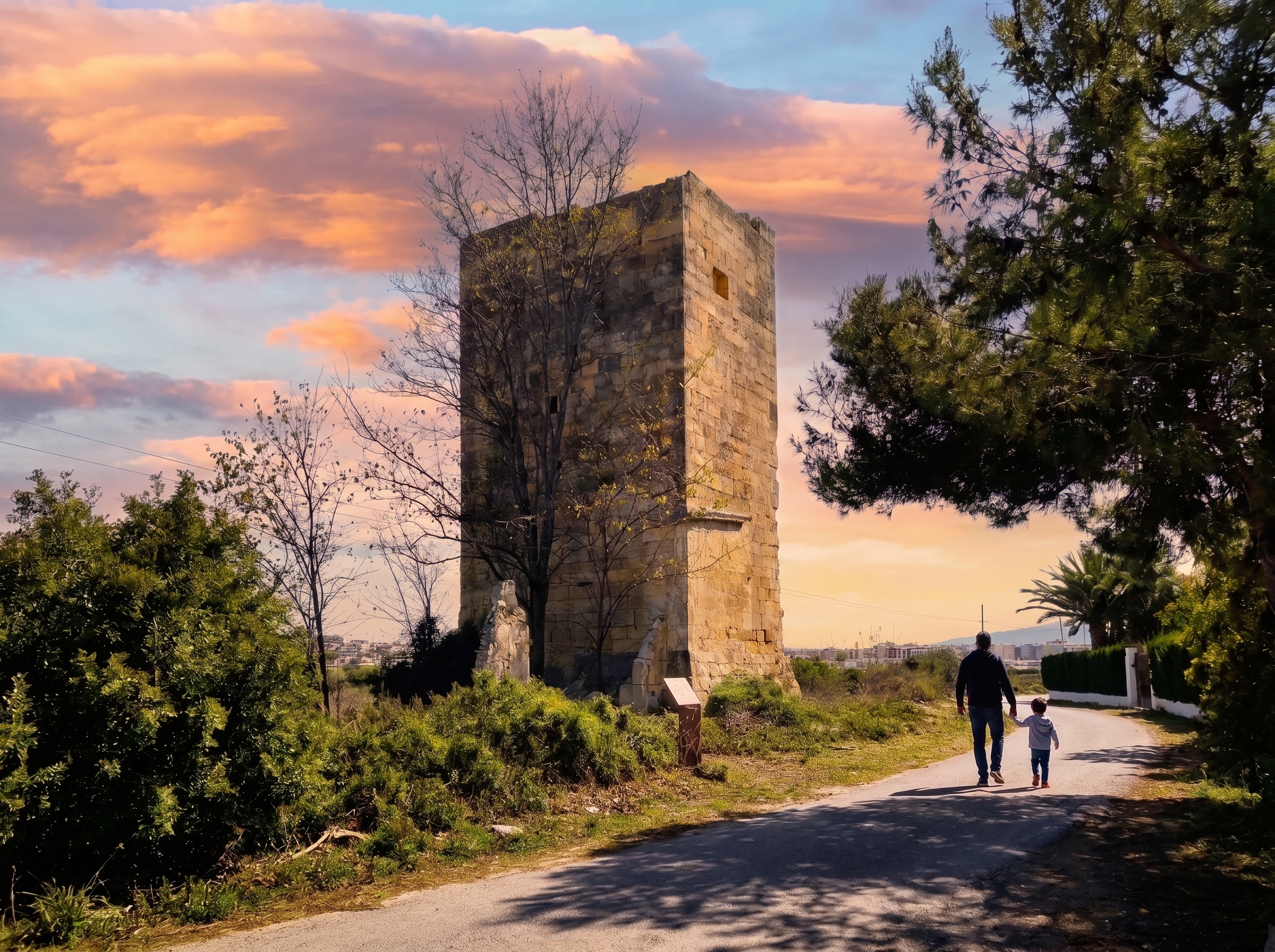
Torre El Ciprés
Partida Fabraquer
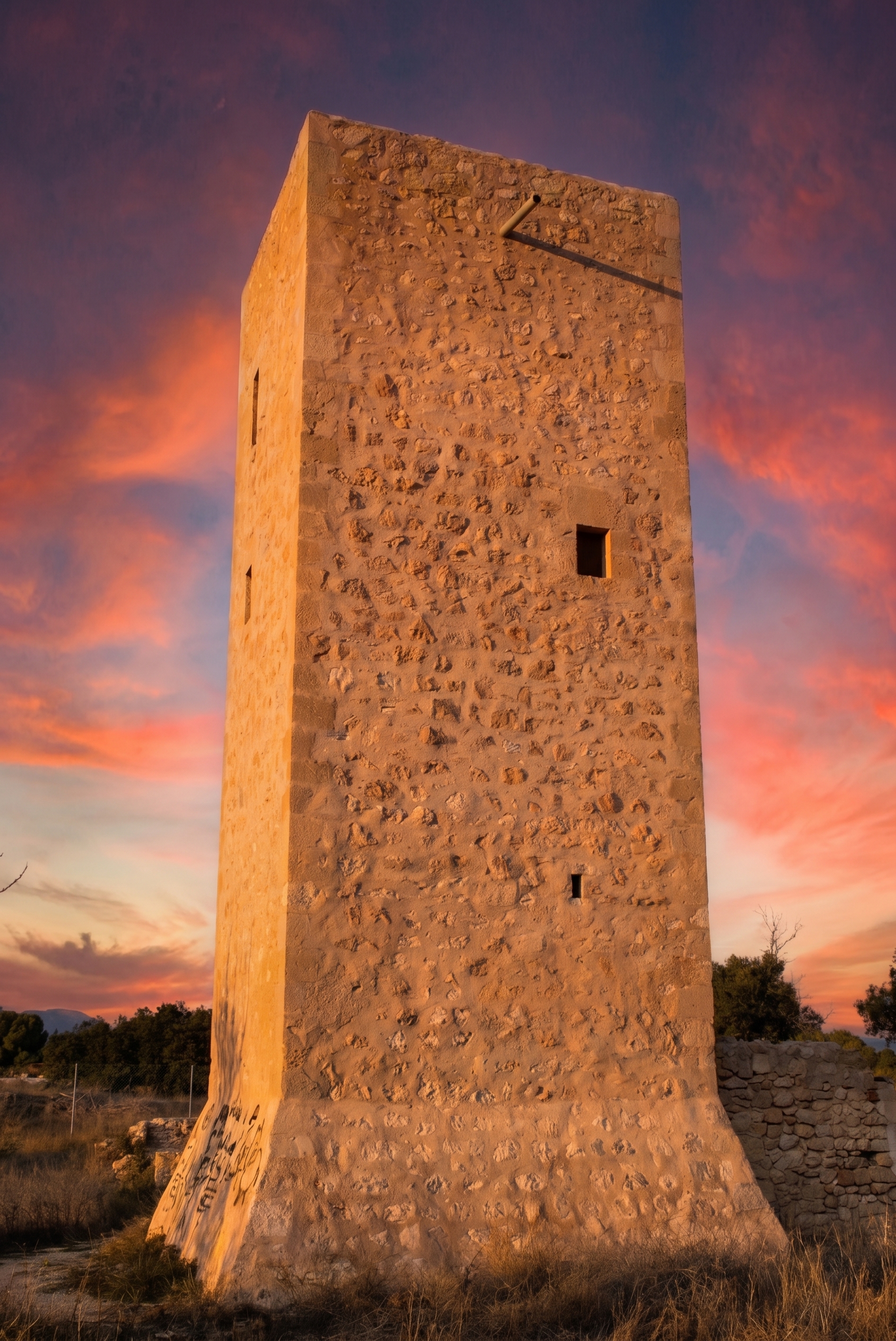
Torre del Conde
Partida de la Huerta
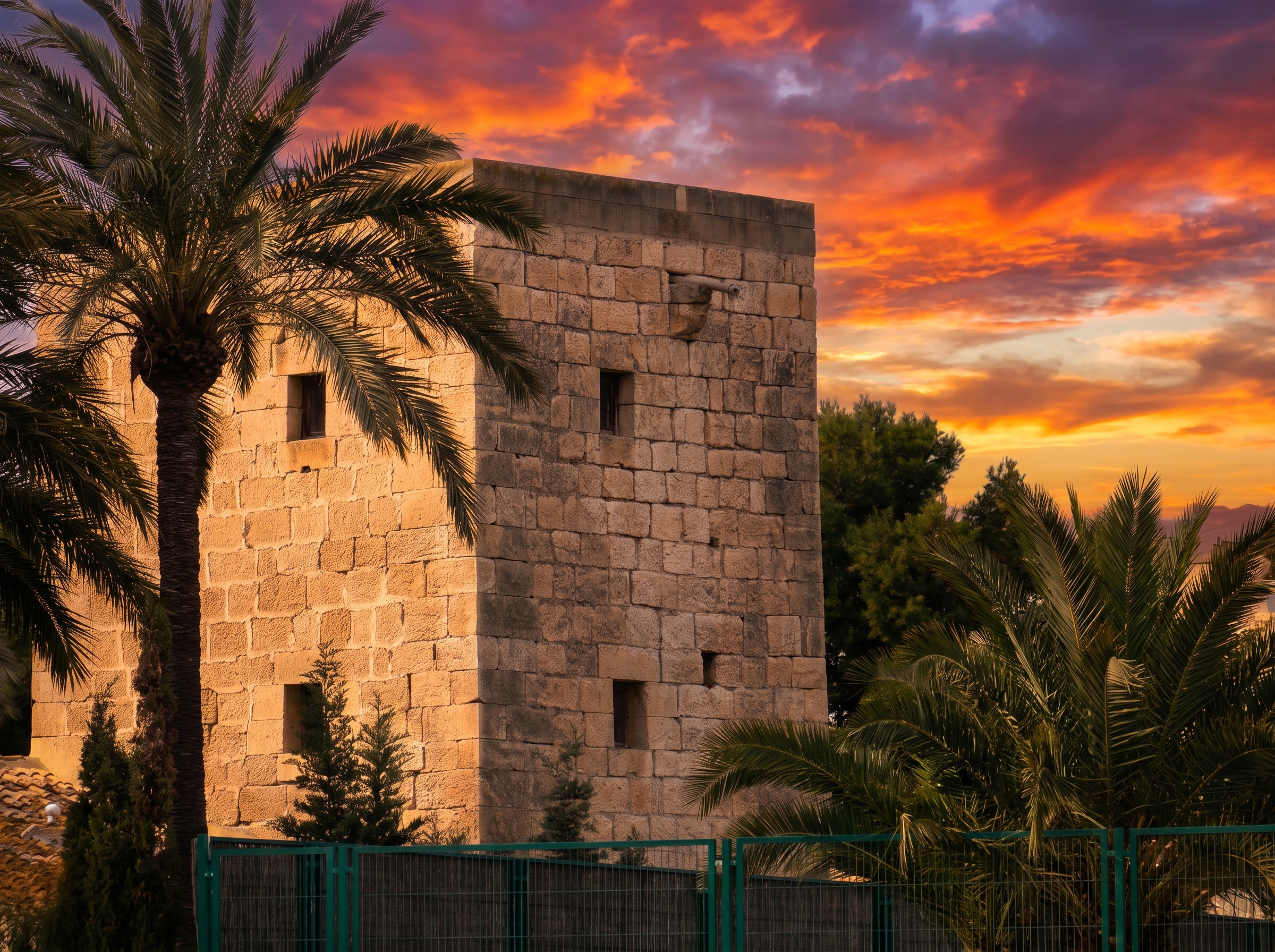
Torre Las Águilas
Partida Fabraquer
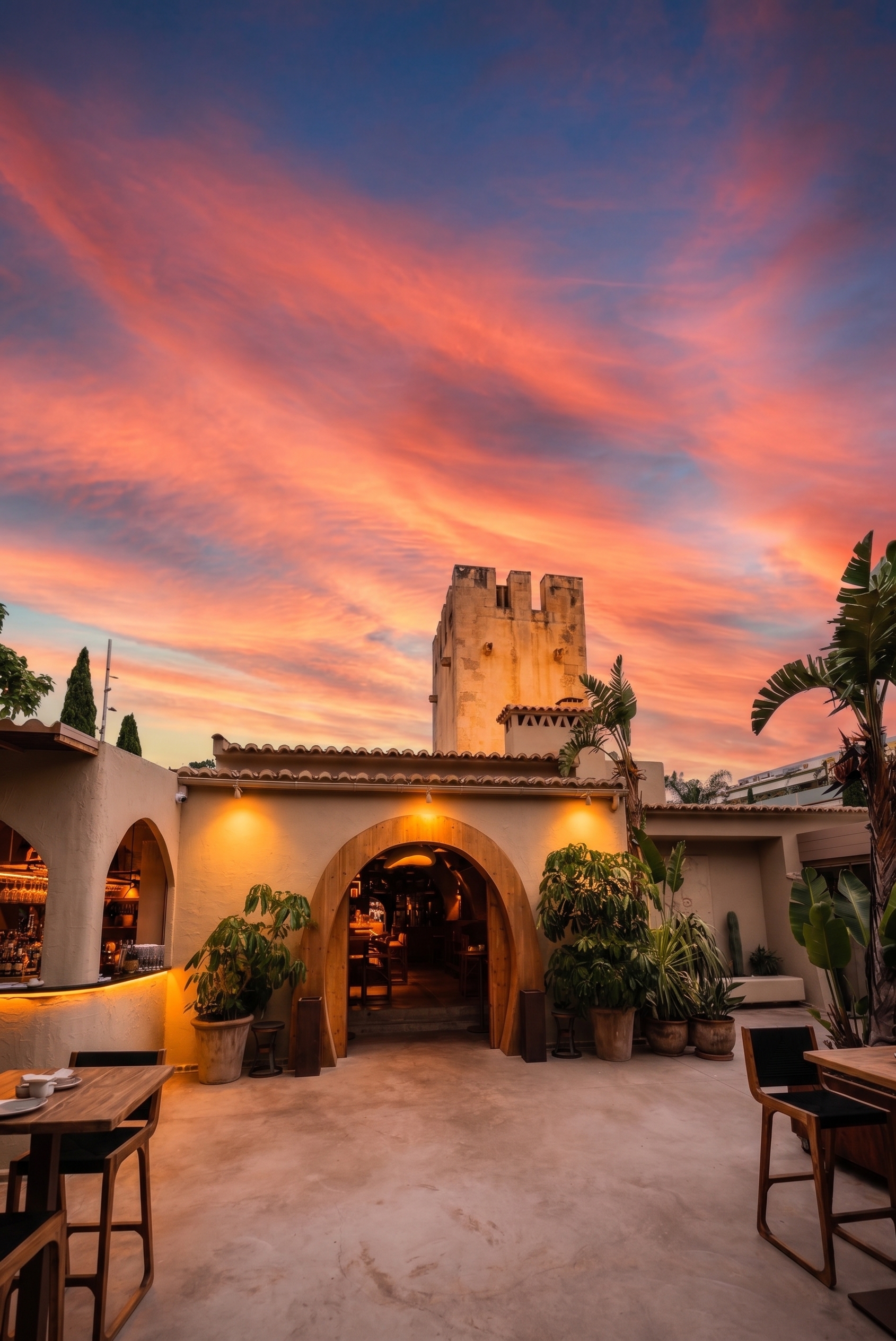
Torre Don García Mauro
Partida de la Condomina
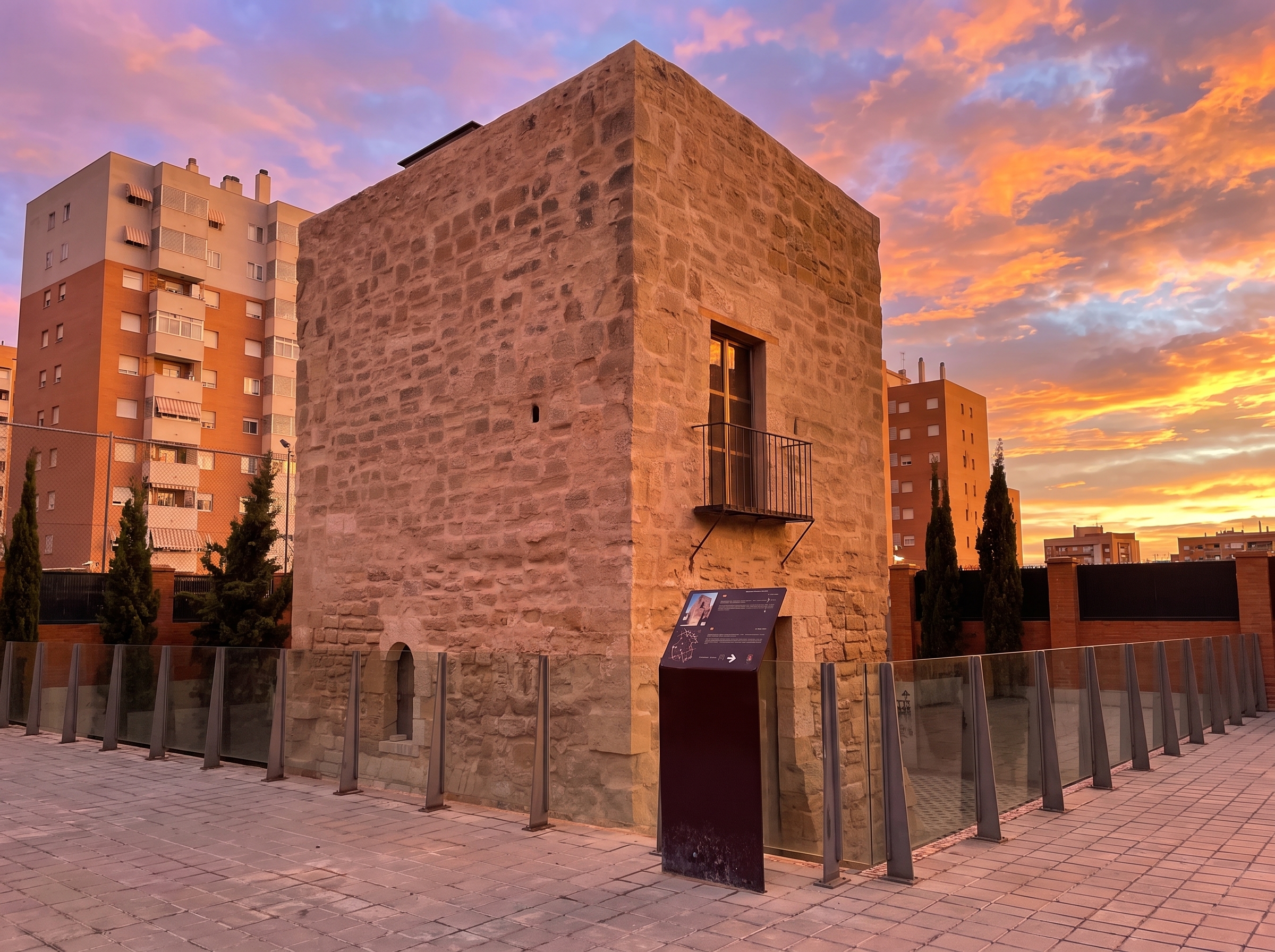
Torre Ferrer
Partida de la Condomina
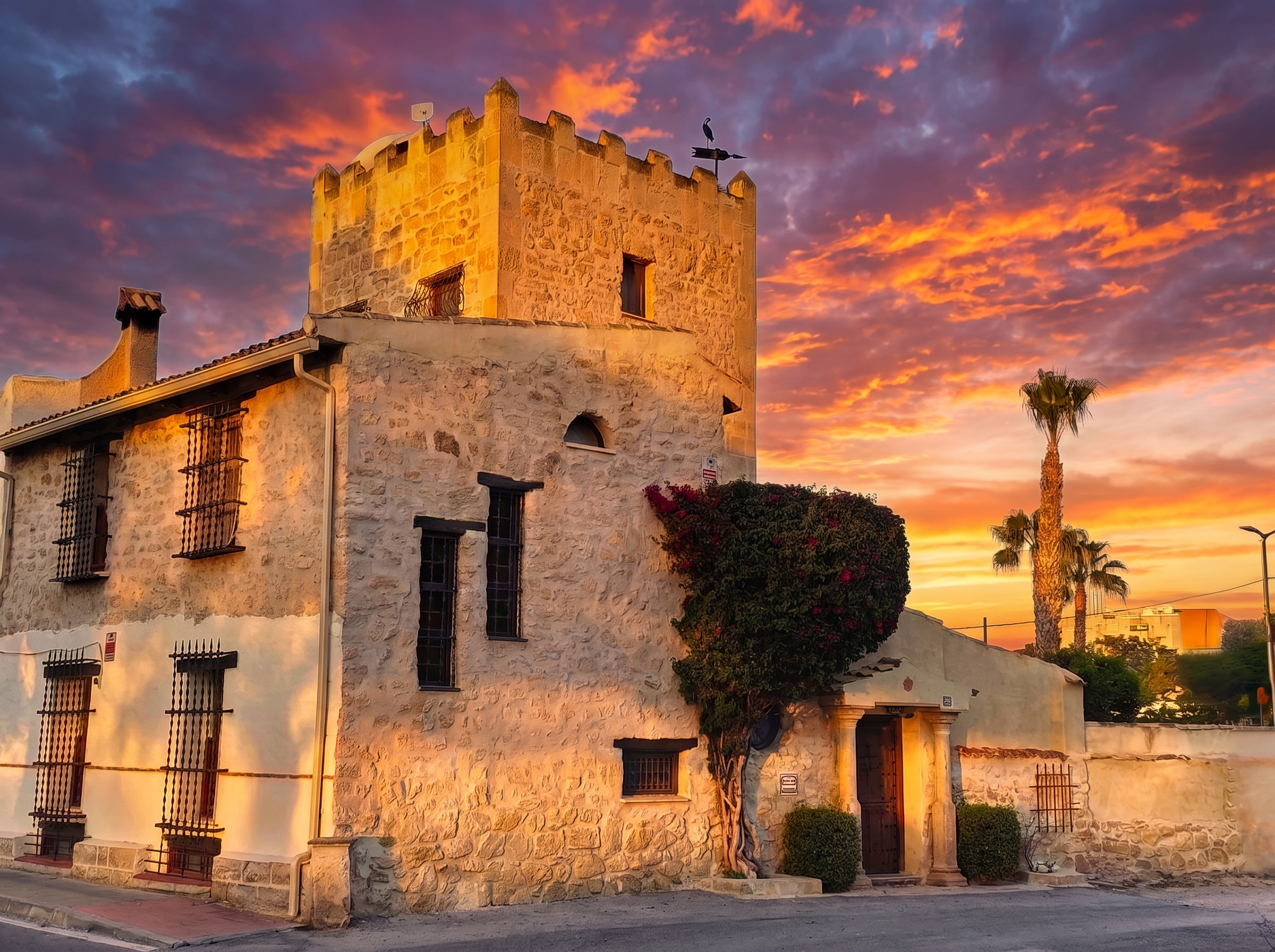
Torre Santiago
Partida de la Condomina
The Huerta's defence towers on À Punt
Report by the Valencian public broadcaster À Punt on the defence towers of the Huerta of Alicante: their origin against Barbary corsairs, their role as watchtowers and refuges, and the condition of those still standing.
Report by the Valencian public broadcaster À Punt on the defence towers of the Huerta of Alicante: their origin against Barbary corsairs, their role as watchtowers and refuges, and the condition of those still standing.
If the video does not play, you can watch it directly on YouTube.
Smoke by day, fires by night
The towers communicated visually: smoke signals during the day and fires on the terrace at night. When a suspicious sail was spotted from a coastal tower, the signal was passed on in a chain by the refuge towers of the huerta until it reached Santa Bárbara Castle and the city of Alicante, which triggered the military response and the protection of civilians.
Watchtower Alarm Network Simulator (1594)
How Barbary corsair warnings traveled and how farmers took refuge
Paso 0 / 4: Peace and Farming in the Huerta
T+00:00Farmers tend to irrigation canals and vineyards while sentinels watch the Mediterranean horizon.
Coastal Defense Ordinances (Kingdom of Valencia): Coastal watchtowers were cylindrical to withstand naval winds, whereas inland refuge towers were square with heavy stone taluses and battlements for sheltering farming families.
Three defensive typologies
Watch
Near the coastline. Their mission was to spot enemy ships and pass on the warning by fire, smoke or bell.
Refuge
Inland, near the farmsteads. They protected the huerta population during the swift corso attacks.
Defence
Next to inhabited nuclei or adjoined to stately homes. Battlements, loopholes and machicolations allowed them to respond to the assault.
Stately dwelling and refuge for the farmer
Each tower was linked to a productive farming estate: vineyards, fruit trees and cereals. Many were the origin of the celebrated Fondillón wine, an aged red from over-ripened Monastrell grapes, a historic emblem of Alicante's huerta.
The tower had a dual role: temporary stately dwelling for the owner —who came up from the city to oversee the estate— and, in case of alarm, refuge for the surrounding farmers. The attached house was occupied during the farming season; the tower was locked from inside when the smoke signal announced the corsairs.
Torre Santiago
A few metres from Torre Sarrió, in the heart of the Albufereta district, stands Torre Santiago, one of the most singular defensive constructions in Alicante's huerta system. Built between the 16th and 17th centuries, it shares with its neighbour the same free-standing square-prism typology, but holds a singular story of destruction and rebirth.
For centuries it was part of the visual chain of alerts against the Barbary corsairs: its sentinels watched the coast while the surrounding estates produced vineyards and cereals. However, unlike other towers that survived through continuous use, Torre Santiago was reduced to severe ruins in the 20th century: only the ashlars of three of its corners remained standing like isolated pillars, while the fourth corner lay largely collapsed on the ground. The acquisition of the estate for its rescue and reconstruction took place in the early 1980s, and by around 1990 it was substantially rebuilt and re-inhabited, not as a military bastion, but as a residential home preserving its historical stonework.
Its restoration returned dignity to its rubble and ashlar walls, its ground floor and three storeys, and a terrace that once again dominates the huerta landscape. One fact fascinates visitors and researchers: in its basement is preserved a sealed tunnel that, according to tradition, connected with the neighbouring Torre Sarrió, evidencing the strategic coordination between the two estates in times of danger.
Today, Torre Santiago is an indispensable witness to understanding the defensive architecture of the Campo de Alicante and the daily life of a huerta that had to fortify itself to protect its agricultural wealth.
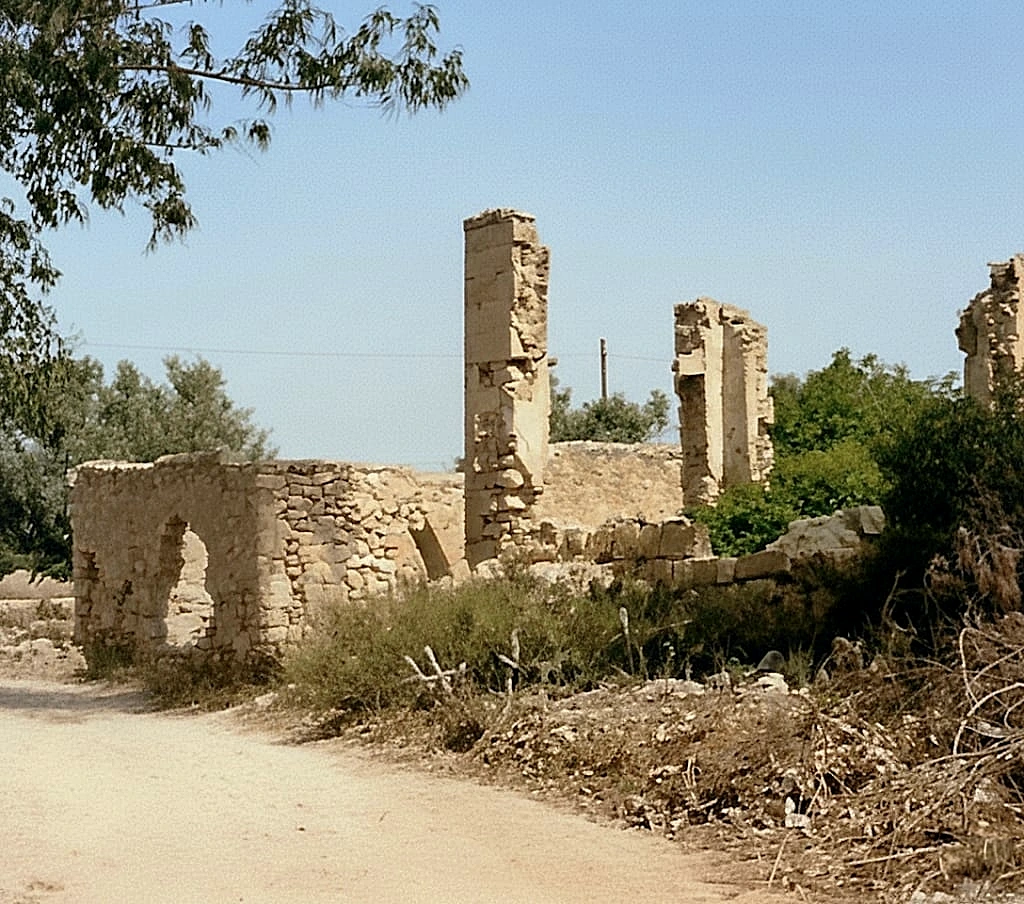
Historical photograph circa 1980: ruined state of Torre Santiago prior to its purchase in the early 1980s and reconstruction completed around 1990 as a family home. The three surviving corner pillars and the stone arch are clearly visible.
Documentary on the history of Torre Santiago. If the video does not play, you can watch it directly on YouTube.
Catalogue by district
La Condomina district
- ◆Torre Plasía (16th–17th c.)
- ◆Torre El Ciprés (1661)
- ◆Torre Media Libra (16th–17th c.)
- ◆Torre de Rejas (16th c.)
- ◆Torre Boter (16th–17th c.)
- ◆Torre Bosch (16th c.)
- ◆Torre Juana (17th–18th c.)
- ◆Torre Nicolau or Alameda (16th c.)
- ◆Torre Villagarcía or Boacio (17th c.)
- ◆Torre Soto (17th–18th c.)
- ◆Torre Cacholí (17th–18th c.)
- ◆Torre del Conde (16th c.)
- ◆Torre de Don García · Torre Mauro · Torre Castillo de Ansaldo (16th c.)
Albufereta district
- ◆Torre Águilas (16th–17th c.)
- ◆Torre Santiago (16th–17th c.)
- ◆Torre Ansaldo or Castellet (16th–17th c.)
- ◆Torre Ferrer (16th–17th c.)
- ◆Torre Sarrió (1594) · this tower
- ◆Torre del Cap de l'Alcodrà · Cabo de la Huerta (16th c., lost)
Santa Faz district
- ◆Torre de Santa Faz (16th c.)
Sant Joan d'Alacant
- ◆Torre Salafranca (16th c.)
- ◆Torre Bonanza (16th c.)
- ◆Torre La Cadena (17th c.)
- ◆Torre Ansaldo · Finca Ansaldo (15th–16th c.)
Mutxamel
- ◆Torre de les Paulines (16th c.)
- ◆Torre Ferraz (16th–17th c.)
- ◆Bell-tower of the Parish of El Salvador (16th c.)
El Campello
- ◆Torre de la Illeta dels Banyets (16th c.)
- ◆Torre del Barranc d'Aigües · Coveta Fumà (16th c.)
Source: Topoguide of the Watchtowers of the Huerta (Alicante City Hall, 2013) and Wikipedia — Defensive towers (Huerta of Alicante).